
What Should I eat while Taking a GLP-1? A Practical Guide to Balanced Meals and Appetite Support
Your guide to nourishing your body, supporting appetite changes, and maintaining steady energy while taking GLP-1.
Clinically reviewed by: Priscilla Rodriguez, MHA, RN
Last updated: December 2025
Starting GLP-1 therapy often changes how your body responds to food. Many people notice they feel full faster, have less appetite, or experience side effects like nausea or fatigue. While these changes can support weight loss, they can also make eating feel confusing at first.
Eating well on GLP-1 isn’t about eating less, it’s about eating with intention. The right food choices can help support energy, reduce side effects, and keep your body nourished as your appetite shifts. This guide breaks down how to build balanced meals that work with GLP-1, not against it.
Understanding GLP-1 and Nutrition
GLP-1 medications work by mimicking a natural hormone in the body that helps regulate blood sugar and appetite. These effects help control blood sugar and reduce appetite, which is why GLP-1 medications are commonly used for metabolic and weight support. Understanding how this hormone functions can make it easier to adapt your eating habits in a supportive way.
What Is GLP-1?
GLP-1 (glucagon-like peptide-1) is a hormone released in the gut after eating. It helps:
- Stimulate insulin release
- Slow digestion
- Signal fullness to the brain
How GLP-1 Affects Appetite
Because GLP-1 slows how quickly food leaves the stomach, many people feel full sooner and stay full longer. This can be helpful for appetite regulation, but it also means meal size, food composition, and timing matter more than before.
Eating too quickly, skipping protein, or choosing heavy or highly processed foods may increase discomfort. Adjusting how and what you eat can make a noticeable difference in how you feel day to day.
Why Balanced Meals Matter on GLP-1
A well-rounded plate provides your body with the fuel it needs, even when appetite is lower. Research shows that adequate protein, fiber, and micronutrient intake is especially important while on appetite-suppressing medications. Eating on GLP-1 isn’t just about reducing calories. Balanced meals help by:
- Maintaining steady energy
- Supporting blood sugar regulation
- Reducing nausea and fatigue
- Preventing nutrient gaps
Building a GLP-1–Supportive Plate
Eating well on GLP-1 isn’t about strict rules or perfect meals. It’s about choosing foods that feel good in your body, support digestion, and help keep energy steady as appetite changes.
Most people feel best when meals are built around a few key nutrients:
- Protein to support muscle, metabolism, and satiety
- Fiber to aid digestion and support blood sugar balance
- Healthy fats, in moderate amounts, to support nutrient absorption
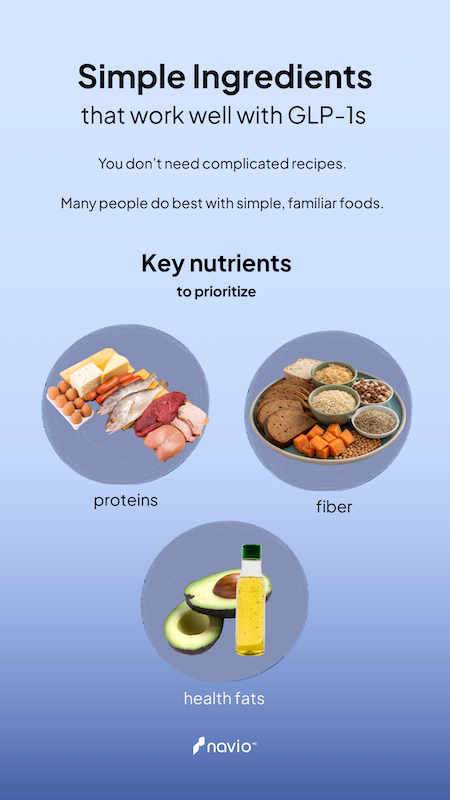
Together, these nutrients help stabilize energy and may reduce side effects like dizziness or fatigue. Protein and fiber tend to work best when included in smaller amounts at each meal, rather than in large portions all at once. Meals that feel satisfying but not heavy often include options like eggs, fish, poultry, tofu, or Greek yogurt paired with vegetables, beans, berries, or whole grains.
Some foods may feel harder to tolerate, especially early on. Paying attention to how your body responds can be helpful, particularly with:
- Very greasy or fried foods
- Highly processed snacks
- Large meals eaten quickly
These foods aren’t automatically off limits, but noticing patterns can guide choices that feel more comfortable over time.
Simple Meal Ideas That Work Well on GLP-1
You don’t need complicated recipes. Many people do best with simple, familiar foods.
Breakfast ideas
- Scrambled eggs with vegetables
- Greek yogurt with berries and nuts
- Protein smoothies with fruit and fiber
Lunch and dinner ideas
- Grilled chicken or fish with vegetables and quinoa
- Soup with beans, lean protein, and greens
- Stir-fried vegetables with tofu or shrimp
Snack ideas
- Apple slices with nut butter
- Cottage cheese with fruit
- Hummus with vegetables
Smaller portions eaten slowly are often better tolerated than large meals.
Managing Common Side Effects Through Nutrition
Experiencing side effects while on GLP-1 can feel discouraging, especially when you’re trying to “do everything right.” In most cases, these symptoms are not a sign that something is wrong, but rather that your body is adjusting to changes in digestion, appetite, and hormone signaling. Nutrition plays a powerful role during this transition. Small, thoughtful adjustments to how and what you eat can often make side effects more manageable and help your body settle into a steadier rhythm.
Nausea Support
If nausea shows up, gentle changes can help:
- Eating smaller meals more frequently
- Avoiding very rich or greasy foods
- Choosing bland options like toast, rice, or soups
Some people also find ginger tea or ginger-based foods soothing during this phase.
Low Appetite and Missed Meals
A reduced appetite is common on GLP-1, but your body still needs consistent nourishment. When full meals feel difficult, nutrient-dense options like smoothies, soups, or soft foods can help you meet protein and energy needs without feeling overwhelmed.
Hydration and Electrolytes
GLP-1 can also dull thirst cues, making it easier to fall behind on hydration. Staying well hydrated supports digestion, energy levels, and overall well-being. Water remains essential, and electrolytes may be helpful if intake is low or physical activity is higher.
Bringing It All Together
Eating on GLP-1 is about nourishment, not perfection. When meals are balanced, gentle, and supportive, they can help stabilize energy, reduce side effects, and support long-term metabolic health.
At NavioMD, we take a whole-person approach to GLP-1 care, looking at nutrition, appetite changes, lifestyle, and daily routines together. If you’re ready for guidance that meets you where you are, we’re here to help.
Book your telehealth consultation with NavioMD today and get care designed around you.
Keywords: GLP-1 diet, GLP-1 nutrition, eating on GLP-1, GLP-1 meal plan, GLP-1 food guide, GLP-1 weight loss diet, what to eat on GLP-1, foods to eat while taking GLP-1, GLP-1 nutrition tips, best foods for GLP-1, GLP-1 protein intake, GLP-1 appetite support, GLP-1 metabolism support, protein and fiber, balanced meals, blood sugar balance, insulin sensitivity, nutrient-dense foods, gut health nutrition, hydration and electrolytes, nausea on GLP-1, low appetite nutrition, fatigue on GLP-1, GLP-1 side effects food, eating with reduced hunger, GLP-1 telehealth, personalized nutrition care, sustainable weight loss, metabolic health support
Citation references:
- https://my.clevelandclinic.org/watch/glp-1-diet
- https://www.uchealth.org/today/nutrition-vital-when-taking-glp-1-weight-loss-drugs/
- https://pmc.ncbi.nlm.nih.gov/articles/PMC12125019/
- https://www.sciencedirect.com/science/article/pii/S266736812500049X
- https://jamanetwork.com/journals/jamainternalmedicine/fullarticle/2836527
Download our high-protein, high-fiber cheat sheet
A guide to grocery shopping with high-protein, high-fiber, nutrient-dense foods.


Explore
Contact us
Location
7901 4th St N#23153 St. Petersburg, FL 33702
9am—10pm EST
Mon-Sun



Copyright © 2025 NavioMD
*Based on internal patient survey. Results vary. | Not a substitute for professional medical advice. Consult your healthcare provider before starting any treatment.